
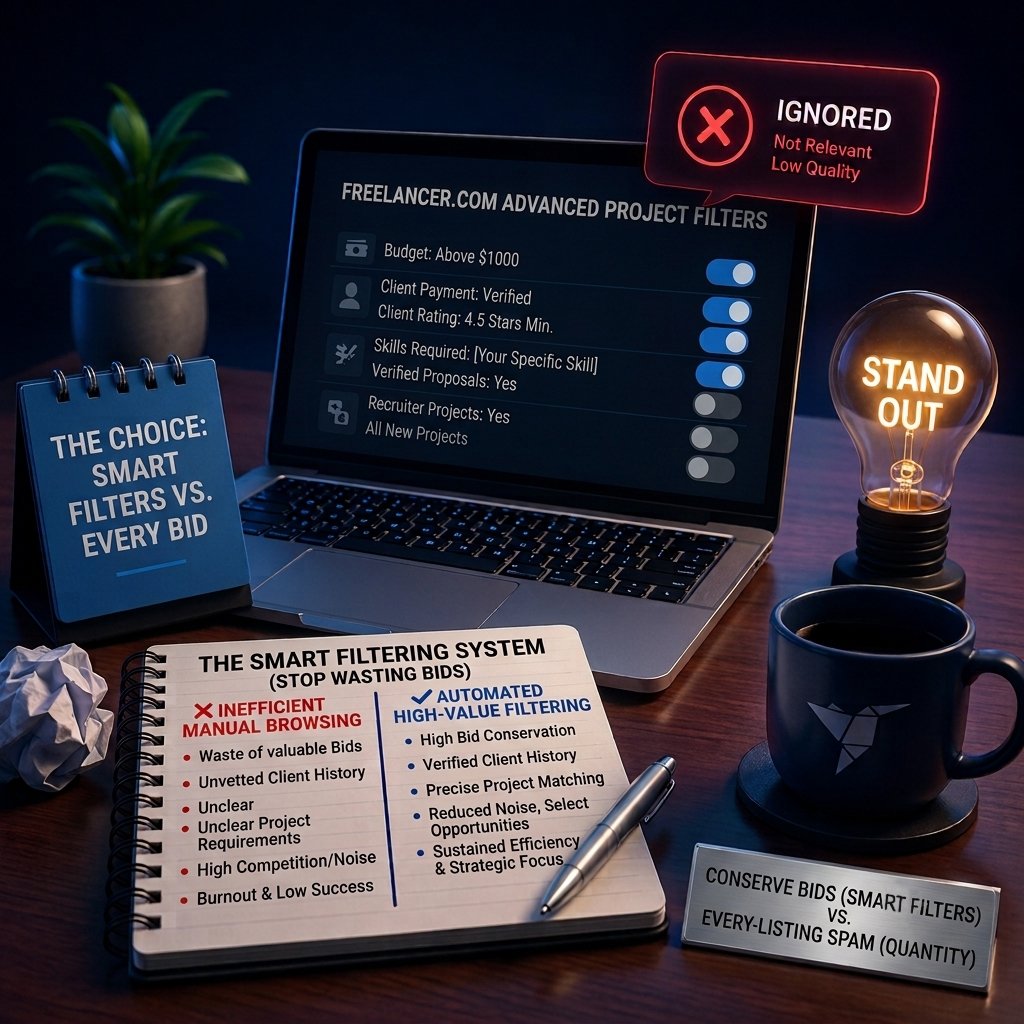
Most freelancers treat every project listing the same way. A new post shows up, it loosely matches their skills, and they bid. Then they do it again on the next one, and the one after that. By the end of the week they’ve burned through dozens of bids and won almost nothing.
The problem usually isn’t the proposal. We’ve already covered why most proposals get ignored and how to fix them. The problem here is earlier in the process. It’s the decision to bid on the project at all.
Filtering is the part of freelancing nobody talks about, because it doesn’t feel like “doing the work.” Writing a proposal feels productive. Scrolling through listings and saying no to most of them feels like you’re being slow or picky. But the freelancers who consistently win projects aren’t the ones who bid the most. They’re the ones who bid selectively, on the projects they’re actually positioned to win.
Why Bidding on Everything Backfires
Every bid costs you something, even on platforms where bids are technically free. It costs you time writing the proposal. It costs you a slot in your daily bid allowance if you’re on a limited plan. And it costs you something less obvious: pattern recognition from the client’s side. If your profile is bidding on web design, data entry, video editing, and logo work all in the same week, a client skimming your bid history sees a generalist who’ll take anything, not a specialist who solves their exact problem.
We talked about this in Generalist vs. Specialist. Clients are pattern matching whether they realize it or not. A scattered bid history undercuts your positioning before the client even reads your proposal.
There’s also a math problem. If you bid on 50 projects a week with a 4% win rate, you’re winning two projects. If you filter hard and bid on 15 well matched projects with a 20% win rate, you’re winning three, and you spent a third of the time getting there. The second freelancer isn’t more talented. They were just more selective about which fights to enter.
What Good Filtering Actually Looks Like
Filtering isn’t about being rigid or missing opportunities. It’s about building a quick mental checklist (or an automated one) that you run every project through before you commit time to a proposal.
Budget realism. A project listed at $30 to $250 for a custom web application is not a budget problem you’re going to solve with clever pricing. It’s a signal the client hasn’t scoped their own project yet, which usually means scope creep later. Filtering by minimum budget isn’t about greed. It’s about avoiding projects that are structurally unprofitable before you even start.
Client verification signals. Payment verified, a real project history, a reasonable number of past hires. None of these guarantee a good client, but their absence is a real warning sign worth weighting heavily.
Project description quality. Vague briefs (“need a website, will discuss details”) usually mean the client doesn’t know what they want yet, which means endless revisions later. Specific briefs with clear deliverables are worth far more of your time than they first appear, even if the budget looks modest.
Time since posting. This connects directly to the 5-minute rule. A great project that’s three hours old with forty proposals already in is a different opportunity than the same project five minutes old with two. Filtering by freshness changes your odds before you’ve written a single word.
Keyword red flags. Certain phrases in a brief tend to predict trouble: “ongoing work for the right person,” “must be available 24/7,” “looking for long term partnership” paired with an unusually low budget. None of these are automatic disqualifiers, but they’re worth weighting in your decision.
Building Your Own Filter, Even Without Software
You don’t need automation to start filtering better. Open a notes document and write down your actual non-negotiables. Minimum budget you’ll accept for a fixed project. Minimum hourly rate. Countries or currencies you’ve had bad experiences with. Keywords that have burned you before. Then hold yourself to it for two weeks.
Most freelancers skip this step because it feels like extra work upfront. But the freelancers earning consistently aren’t smarter or more skilled than everyone else on the platform. They’ve just gotten ruthless about which projects deserve their time, the same way a good editor is ruthless about which sentences deserve to stay in a draft.
If you’re already specializing into a niche, like we discussed in the personas article, your filter should reflect that niche specifically. A WordPress specialist filtering for “web development” broadly is still wasting time on Shopify builds and custom PHP projects that aren’t really their lane. Filter for your actual specialty, not just your general category.
The Compounding Effect
Here’s what most people miss about filtering well. It doesn’t just save you time today. It changes your bid history over time, which changes how clients perceive your profile, which makes your future proposals land better. A focused bid history reads as expertise. A scattered one reads as desperation, even if that’s not what’s actually happening.
Speed gets you to the front of the line. A sharp proposal gets you the interview. But filtering is what decides whether you’re even racing toward projects worth winning in the first place. Get that part right, and the other two pieces start working a lot harder for you.